
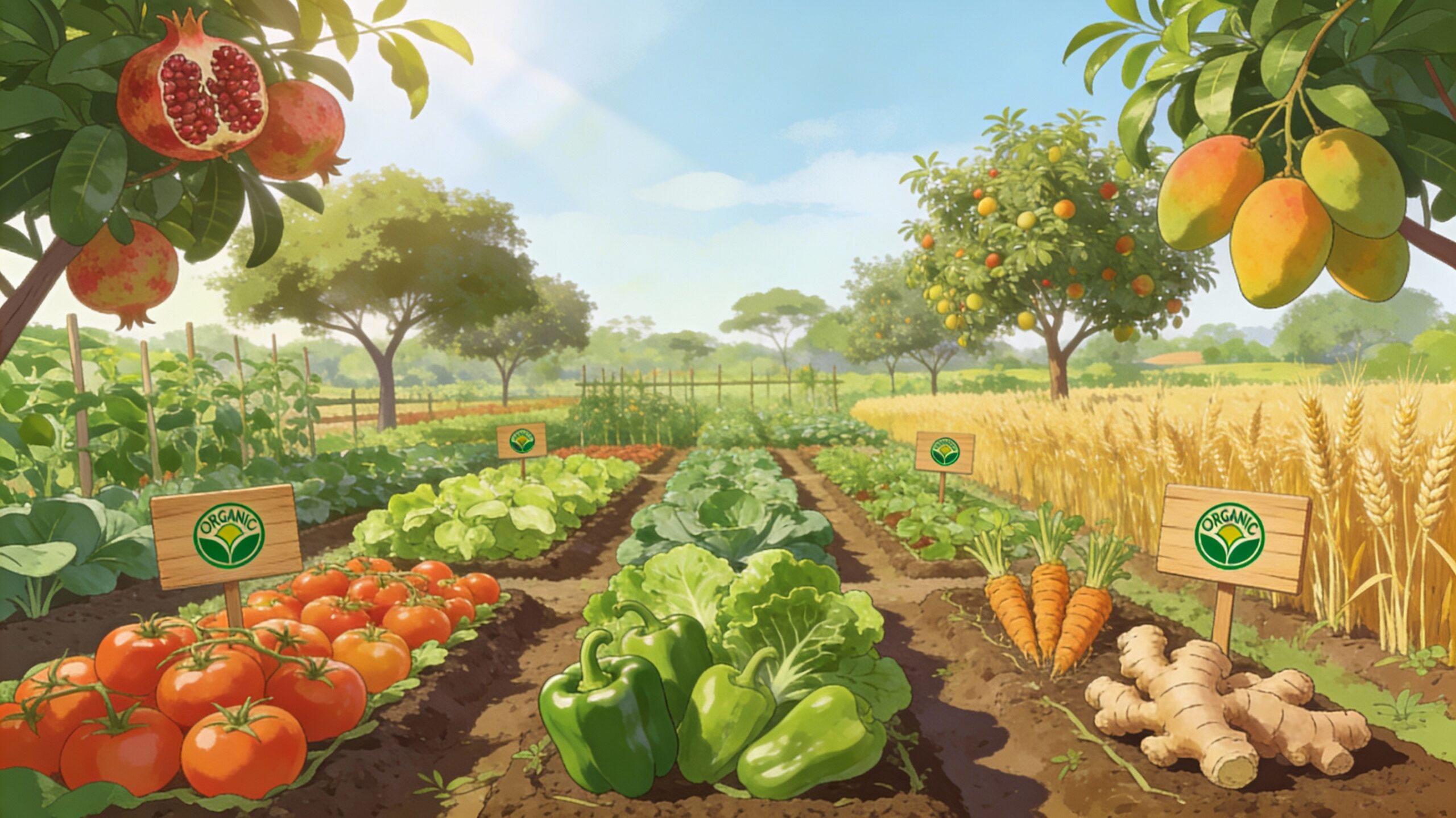
Profitable organic crops in 2026 are not just a trending phrase—they’re a real opportunity knocking at the doors of farmers and agripreneurs. As consumers become increasingly health-conscious and sustainability-focused, organic farming is shifting from a niche to a mainstream approach. If you’re planning, 2026 could be your breakthrough year.
Let’s walk through the most promising organic crops that combine demand, profit, and long-term growth.
Table of Contents
Why Organic Farming Will Boom in 2026
Rising consumer awareness
Profitable organic crops in 2026: Organic farming will see unprecedented growth as consumers become more aware of the benefits of sustainable agriculture. Shoppers are increasingly concerned about food safety, chemical-free produce, and eco-friendly practices. This rising consumer awareness is driving demand for organic products across global markets, positioning organic farming in 2026 as a turning point for healthier lifestyles and greener choices.
Government support and subsidies
Another major factor behind the boom in organic farming in 2026 is strong government support and subsidies for farmers. Many countries are introducing policies that reduce costs for organic certification, provide financial incentives, and encourage eco-friendly farming practices. These initiatives make sustainable agriculture more accessible, helping farmers transition smoothly while ensuring consumers benefit from affordable organic produce.
For more detailed info, see the official report by the FAO:https://www.fao.org/home/en
How We Selected These Profitable Organic Crops
Market demand
The selection of profitable organic crops is strongly influenced by rising market demand. Consumers are increasingly choosing organic produce for its health benefits and eco‑friendly appeal, creating consistent opportunities for farmers to grow crops that sell quickly and at premium prices.
Profit margin
Another key factor in choosing these crops is their profit margin. By analyzing input costs, yield potential, and selling prices, we identified organic varieties that deliver higher returns compared to conventional farming. This ensures farmers can maximize income while meeting growing consumer needs.
Ease of cultivation
We also considered the ease of cultivation, focusing on crops that require minimal chemical inputs, adapt well to diverse climates, and can be managed with sustainable practices. This makes organic farming more accessible and reduces risks for new and experienced farmers alike.
#1. Organic Turmeric
Why it’s profitable
Organic turmeric is considered one of the most profitable organic crops because of its high demand in both domestic and international markets. With growing consumer preference for natural health remedies and chemical‑free spices, farmers can achieve strong returns due to premium pricing and consistent market opportunities.
Market outlook
The market outlook for organic turmeric remains highly positive, driven by its use in food, cosmetics, and Ayurvedic medicine. Rising global awareness of its medicinal properties and increasing export potential ensure steady growth, making it a reliable choice for long‑term profitability.
#2. Organic Ginger
Demand drivers
Organic ginger is gaining popularity due to its wide use in food, beverages, and natural medicine. Rising consumer preference for chemical‑free spices, along with the growing trend of healthy living, makes it one of the most profitable organic crops. Strong domestic demand and increasing awareness of its medicinal benefits continue to drive market growth.
Export potential
The export potential of organic ginger is significant, especially in regions like Europe, North America, and the Middle East, where demand for organic products is expanding rapidly. Its role in herbal remedies, teas, and wellness products ensures steady international demand, offering farmers lucrative opportunities in global trade.
#3. Organic Garlic
Health benefits boost sales
Organic garlic is widely recognized for its powerful health benefits, including boosting immunity, improving heart health, and acting as a natural antibiotic. These qualities make it highly attractive to health‑conscious consumers, driving steady demand and positioning it among the most profitable organic crops. As awareness of its medicinal value continues to grow, sales of organic garlic are expected to rise significantly in both domestic and international markets.
#4. Organic Moringa
Superfood status
Moringa has earned global recognition as a powerful superfood thanks to its rich nutritional profile. Packed with vitamins, minerals, antioxidants, and essential amino acids, it supports immunity, energy, and overall wellness. Its versatility in powders, teas, and supplements has made it a favorite among health enthusiasts, driving strong demand in both local and international markets.
#5. Organic Quinoa
Premium pricing advantage
Organic quinoa enjoys a strong premium pricing advantage because of its reputation as a nutrient‑dense superfood. With rising global demand for healthy, gluten‑free alternatives, consumers are willing to pay higher prices for organically grown quinoa compared to conventional grains. This premium not only boosts farmer profitability but also secures quinoa’s position as a high‑value crop in both domestic and international markets.
#6. Organic Strawberries
High returns in small spaces
Organic strawberries are an excellent choice for farmers with limited land because they deliver high returns in small spaces. Their compact growth pattern allows for intensive cultivation, while strong consumer demand for fresh, chemical‑free berries ensures premium pricing. With proper care and sustainable practices, even small plots can generate impressive profits, making strawberries a smart option for maximizing yield and income.
#7. Organic Leafy Greens
Fast harvest cycles
Organic leafy greens such as spinach, kale, arugula, and lettuce are highly valued for their fast harvest cycles. These crops can be grown and harvested multiple times within a season, allowing farmers to maintain a steady supply and generate consistent income. Their quick turnaround, combined with strong consumer demand for fresh, nutrient‑rich produce, makes leafy greens an efficient and reliable choice for sustainable farming.
#8. Organic Herbs (Basil, Mint, Coriander)
Urban farming, friendly, profitable, and organic crop
Organic herbs such as basil, mint, and coriander are ideal for urban farming because they thrive in small spaces, containers, and rooftop gardens. Their quick growth cycle and constant demand in kitchens make them easy to cultivate and highly rewarding. As profitable organic crops, they offer farmers and urban gardeners steady income opportunities while promoting sustainable food production in cities.
#9. Organic Pulses
Protein demand surge
Organic pulses are gaining global attention as the demand for plant-based protein continues to surge. With rising health awareness and a growing emphasis on sustainable diets, pulses such as lentils, chickpeas, and beans offer affordable, eco-friendly protein sources that meet modern nutritional needs.
#10. Organic Oilseeds
Sustainable income source
Organic oilseeds, such as sunflower, sesame, and mustard, provide farmers with a reliable and eco-friendly income stream. Their high market demand, nutritional value, and versatile uses make them a sustainable choice for long-term agricultural profitability.
Key Tips to Maximize Profit in Organic Farming
Certification matters
Organic certification builds trust and credibility, allowing farmers to access premium markets and higher prices. It assures consumers of authenticity, strengthens brand value, and opens opportunities for exports and institutional buyers seeking certified organic produce.
Direct-to-consumer sales
Selling directly to consumers through farmers’ markets, online platforms, or community-supported agriculture (CSA) programs increases profit margins. It eliminates middlemen, fosters customer loyalty, and provides valuable feedback to improve products while strengthening local food networks.
Conclusion
Organic farming in 2026 is not about trends—it’s about timing. Choosing the right crop today can secure a steady income tomorrow. With smart planning, certification, and market access, profitable organic crops in 2026 can transform farming into a sustainable and rewarding business.