
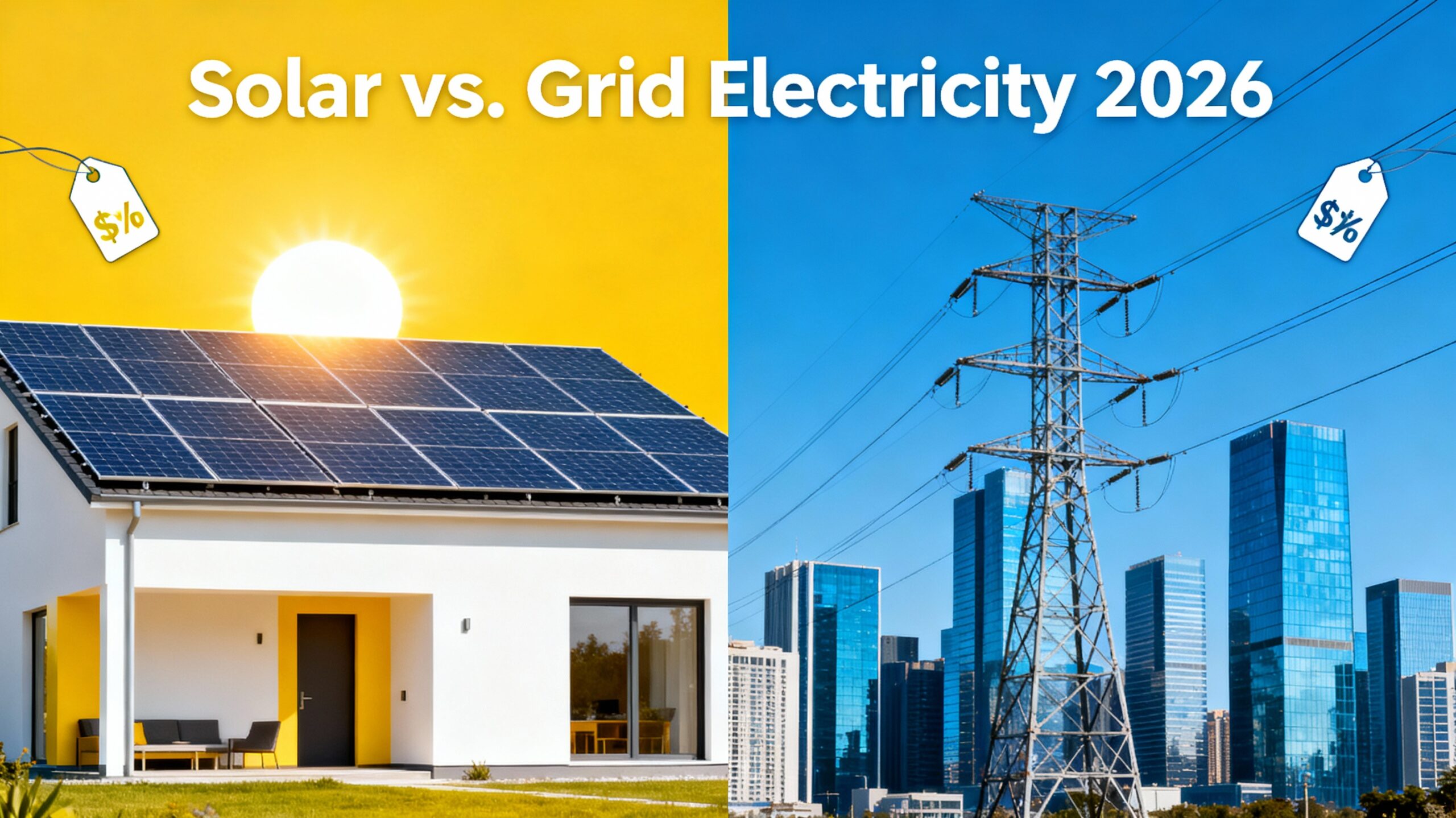
Solar vs. Grid Electricity in 2026 is quickly becoming one of the hottest debates as energy prices shift, technology evolves, and homeowners search for smarter, more affordable power options. With electricity costs rising year after year, understanding which option actually saves more money is more important than ever.
Table of Contents
Understanding Solar vs. Grid in 2026
Solar vs. grid electricity in 2026 isn’t just about choosing between two power sources—it’s about choosing long-term financial stability. The debate of solar vs. grid energy highlights the growing shift toward sustainable power solutions.
Short answer?
Solar is becoming cheaper, while grid electricity continues to rise in cost. Solar vs. grid is the ultimate battle shaping the future of household energy savings.
But the full picture is worth exploring.
Why Energy Costs Are Changing Rapidly
Energy markets are unpredictable.
Fuel shortages, inflation, and rising distribution costs are all pushing grid power prices higher.
Solar vs. grid is the hottest debate in 2026 as energy costs continue to rise worldwide. When it comes to monthly savings, solar vs. grid comparisons reveal surprising differences across regions. 💡 Solar vs. grid decisions often depend on sunlight availability, government incentives, and local electricity tariffs.
Meanwhile, solar technology is getting cheaper and more efficient every year. 🔋 Homeowners exploring solar vs. grid options find that solar panels offer long-term financial freedom.
This shift is changing how families think about energy.
The Rising Demand for Clean Energy Solutions
More people want sustainable power.
Solar offers clean energy and long-term savings—two benefits that align perfectly with modern household goals.
Governments are also offering tax credits and rebates, making solar even more attractive in 2026.
Key Differences Between Solar vs. Grid Electricity in 2026
Before comparing costs, it’s important to understand how each power source works.
Cost Structure and Billing Models
Grid electricity uses a pay-as-you-go model.
Every month, you pay for consumption plus taxes and service charges.
Solar, on the other hand, involves upfront costs but very low monthly expenses afterward.
Over time, solar becomes significantly cheaper.
Long-Term Savings Potential
Solar owners often recover their investment in 4–7 years.
After that, power is essentially free.
Grid customers will continue paying rising energy prices year after year.
Real Cost Breakdown: Solar vs. Grid Electricity in 2026
Let’s put the numbers in perspective. When comparing solar vs. grid, homeowners often weigh long-term savings against upfront installation costs.
Upfront Costs and Installation
Solar installation costs have dropped nearly 50% over the past decade.
In 2026, average residential installations are more affordable than ever.
Grid electricity has no upfront cost, but that doesn’t mean it’s cheaper in the long run.
Monthly Electricity Bills in 2026
Solar users enjoy extremely low monthly bills—sometimes as low as $0 with net metering.
Grid users face higher bills due to rising energy rates.
In fact, experts predict grid electricity prices will increase by another 10–15% by the end of 2026.
Maintenance, Repairs, and Hidden Fees
Solar panels require minimal maintenance.
They rarely break and are built to last 25–30 years.
Grid electricity comes with delivery fees, service charges, fuel adjustments, and seasonal hikes.
These hidden charges add up quickly.
Environmental Impact and Efficiency
Money matters, but so does the planet.
Carbon Footprint Comparison
Solar energy reduces greenhouse gases dramatically.
Grid electricity still relies heavily on fossil fuels.
Choosing solar helps create a cleaner and healthier world.
Energy Efficiency and Power Reliability
Solar panels work efficiently even on cloudy days.
With battery storage, homeowners can enjoy power even during outages.
Grid electricity is prone to blackouts, especially during peak demand periods.
Who Saves More? A Side-by-Side Analysis
Here’s where things get interesting.
Savings for Homeowners
Homeowners benefit the most from switching to solar in 2026.
Lower bills, tax credits, and long-term energy independence make the switch highly profitable.
Savings for Businesses
Businesses with large roofs can save thousands every year.
Solar can significantly cut operating costs and improve sustainability scores.
Savings in Rural vs. Urban Areas
Rural areas often face higher electricity costs.
That makes solar an even better investment for those regions.
Urban areas also benefit, especially where energy demand is rising sharply.
Conclusion
Choosing between solar vs. grid electricity in 2026 comes down to one question:
Do you want rising monthly bills or long-term savings?
Solar wins—hands down.
It’s cleaner, more reliable, and significantly cheaper over the long run.
If saving money and securing your energy future matter, solar is the smarter choice.
Learn more about future energy trends here: https://www.energy.gov/