

2026 Organic farming is shaping the future of agriculture with sustainable methods, soil-friendly techniques, and high-profit opportunities. Learn everything you need to know in this ultimate guide.
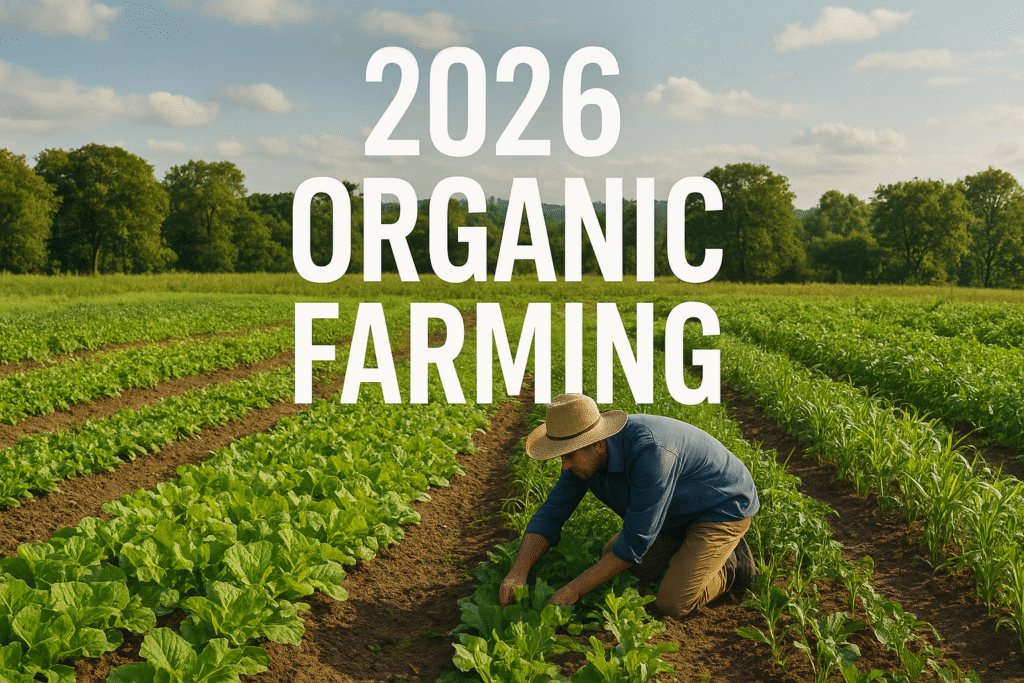
2026 Organic Farming: The Ultimate Guide
2026 Organic farming is becoming the backbone of sustainable agriculture as farmers, consumers, and governments shift toward chemical-free food production. This ultimate guide explains everything you need to know—methods, benefits, challenges, market trends, technology, and profitable practices—so you are fully prepared for the agricultural landscape of 2026. https://www.ifoam.bio/
1. Introduction to 2026 Organic Farming
2026 Organic Farming marks a major milestone in global agriculture, driven by rising health awareness, environmental concerns, and shifting consumer habits. By 2026, the demand for organic vegetables, cereals, fruits, and dairy products is expected to reach record highs. This guide helps you explore how organic farming will evolve and how you can benefit from this green revolution.
2. Why Organic Farming Will Dominate in 2026
Consumers are choosing organic food due to pesticide concerns and nutritional benefits. With the world focusing on climate-friendly practices, 2026 Organic Farming becomes not just a trend but a necessity.
Governments worldwide are offering subsidies, organic certification support, and training programs to encourage farmers to switch.
3. Key Principles of Organic Farming
Organic farming in 2026 follows core principles:
- Zero use of synthetic fertilizers
- Protection of the soil microbiome
- Natural pest-control methods
- Conservation of water and biodiversity
- Ethical livestock management
- Maximum resource recycling on the farm
These principles create healthier soil, higher nutrient content, and sustainable yields.
4. Modern Techniques for 2026 Organic Farming
To achieve the best results, farmers in 2026 use:
A. Crop Rotation
Reduces pest buildup and enhances soil health.
B. Green Manure
Plants like sun hemp and clover improve nitrogen levels naturally.
C. Composting
Organic waste is converted into nutrient-dense mulch. https://izhar-web-digital.com/BEST ORGANIC FERTILIZERS
D. Mulching
Reduces water loss and suppresses weeds.
E. Biofertilizers
Rhizobium, Azospirillum, and mycorrhizae replace synthetic fertilizers.
F. Natural Pest Control
Neem oil, pheromone traps, and kitchen waste pesticides dominate in 2026 organic farming.
5. Technology Transforming Organic Agriculture
Organic farming is no longer “traditional only.” In 2026, technology makes it smarter.
A. AI-based Soil Monitoring
Sensors measure moisture, pH, and nutrient levels.
B. Drone Surveillance
Drones help monitor pest attacks and crop health.
C. Automated Irrigation
Smart irrigation systems reduce water usage by up to 40%.
D. Blockchain for Traceability
Consumers can trace the journey of organic food—from farm to plate.
E. Market Forecasting Tools
Farmers can predict crop demand and increase profitability.
6. Economic Benefits of Organic Farming in 2026
Organic produce sells at 30–200% higher prices. With rising demand in cities, farmers switching to 2026 Organic Farming earn more income with lower input costs.
Key benefits include:
- Reduced spending on chemicals
- Higher profit margins
- Long-term soil fertility
- Access to premium export markets
Countries like India, the USA, Germany, and Japan are seeing major growth in the organic sector.
7. Challenges Faced in 2026 Organic Farming
While highly profitable, challenges do exist:
- The certification process can be slow
- Yields may initially be lower
- Lack of organic seeds
- Pest control takes time
- Market fluctuations
However, new government schemes and digital training programs are reducing these challenges significantly.
8. Government Policies & Global Trends
Governments across the world are promoting 2026 Organic Farming through:
- Subsidies on organic manure
- Organic cluster development programs
- Free certification assistance
- Market linkages
- Training and awareness programs
Global trends include:
- Rise of urban organic farming
- Organic food subscription boxes
- Plant-based diets
- Carbon credit earnings for organic farmers.
9. Profitable Crops for Organic Farming in 2026
If you want higher profits, consider growing:
- Organic turmeric
- Ginger
- Wheat
- Black rice
- Millets
- Spinach
- Tomatoes
- Mangoes
- Organic herbs (basil, mint, parsley)
These crops offer high demand and low production cost.
10. Best Practices for Farmers in 2026
To succeed in 2026 in organic farming, follow these:
- Test the soil regularly
- Maintain earthworm-rich compost
- Use drip irrigation
- Keep livestock for natural manure
- Practice intercropping to avoid pests
- Build your own organic brand for direct sales
Small steps lead to long-term outcomes.
12. Conclusion
2026 Organic farming is not just a method—it is the future of global food production. With rising demand, government support, better technology, and healthier soil practices, organic farming in 2026 is set to transform agriculture. By adopting modern methods, sustainable principles, and smart tools, farmers can enjoy higher profits while contributing to a greener, healthier planet.
If you are planning to start or upgrade your organic farm, 2026 is the best year to make the transition.