
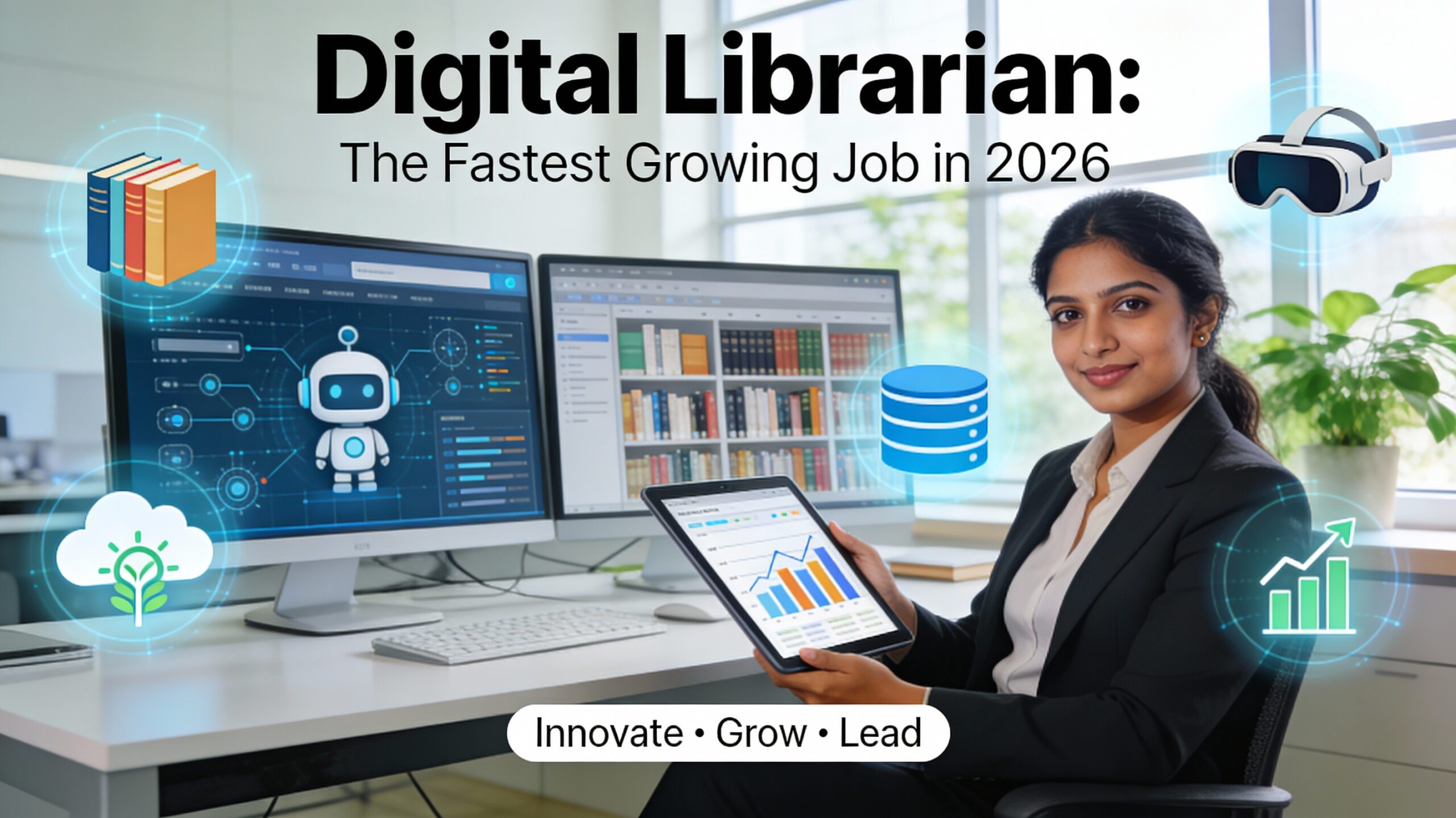
Digital librarian careers are booming, and 2026 is shaping up to be the breakthrough year. As information shifts rapidly from physical formats to digital ecosystems, organizations are realizing they need skilled professionals to manage, protect, and organize this digital knowledge. That’s exactly where the digital librarian steps in.
Let’s explore why this role is in such high demand, what skills you need, and how you can build a future-proof career in this exciting field.
Table of Contents
The Digital Librarian: A Modern Perspective
What Is a Digital Librarian?
A digital librarian is a modern information professional who manages digital content in place of traditional books. Think e-books, online journals, databases, digital archives, and even multimedia collections. Unlike the old image of librarians quietly shelving books, today’s digital librarian works with servers, software, and cloud platforms.
Why This Role Is Exploding in 2026
The world is generating data at an unbelievable pace. Universities, governments, corporations, and research institutions all need experts who can curate and preserve digital knowledge. As a result, the digital librarian role is becoming one of the fastest-growing jobs in 2026.
Modern Libraries and Their Digital Evolution
From Bookshelves to Cloud Storage
Libraries have expanded beyond walls, offering digital access to countless resources worldwide. Library professionals guarantee that these resources are searchable, well-structured, and securely archived.
The Role of Technology in Modern Libraries
Technologies such as cloud computing, AI-powered search tools, and digital repositories have transformed how libraries operate. According to the International Federation of Library Associations, digital transformation is now a core focus for libraries worldwide: https://www.ifla.org/
Key Responsibilities of a Digital Librarian
Managing Digital Collections
Professionals select, organize, and maintain digital resources, including e-books, research papers, audio files, videos, and institutional records
Data Organization and Metadata Creation
Metadata is like a GPS for information. Professionals create accurate metadata so users can quickly locate the content they need.
Ensuring Digital Preservation and Access
Digital content can disappear if not properly preserved. The professionals ensure long-term access by using backups, format migration, and preservation standards.
Professional Skills for Aspiring Digital Librarians
Technical Skills
A successful professional needs knowledge of:
- Digital asset management systems
- Database management
- Basic coding or scripting
- Cloud storage platforms
Soft Skills That Make a Difference
Communication, problem-solving, and collaboration are just as important. A library professional often works with researchers, IT teams, and decision-makers.
Why Adaptability Is Critical
Technology moves quickly, demanding agility and resilience. The ideal digital professional embraces lifelong learning, adapts fearlessly to change, and thrives in the face of constant innovation.
Educational Pathways and Certifications
Degrees That Help You Get Started
Most library professionals hold a degree in Library and Information Science (LIS), Information Management, or Digital Humanities. A master’s degree can significantly boost your career prospects.
Online Courses and Professional Training
Short-term certifications in digital archiving, data curation, or information systems can give you an edge in 2026’s competitive job market.
Why Digital Librarian Is the Fastest-Growing Job in 2026
Rising Demand Across Industries
Library professionals are no longer limited to libraries. They are now hired by:
- Universities
- Tech companies
- Healthcare organizations
- Government agencies
Government, Corporate, and Academic Opportunities
From managing national digital archives to organizing corporate knowledge bases, the library professional’s role is everywhere, shaping how knowledge is preserved, accessed, and shared across diverse sectors.
Salary Trends and Career Growth
Average Salary Expectations in 2026
In 2026, a library professional can expect competitive salaries, often surpassing traditional librarian roles, thanks to specialized digital skills. With expertise in managing online archives, safeguarding sensitive information, and navigating complex copyright laws, these professionals are positioned as high-value assets in the evolving knowledge economy.
Long-Term Career Progression
With experience, a library professional can advance into specialized roles such as digital archivist, knowledge manager, or information systems director. These positions not only demand expertise in organizing and safeguarding information but also require leadership in shaping digital strategies, managing large-scale archives, and guiding organizations through the complexities of knowledge management in the digital age.
Digital Librarian vs Traditional Librarian
Key Differences Explained
Traditional librarians focus on physical collections, while digital professionals work with online content, databases, and digital tools.
Why Digital Skills Matter More Than Ever
In a world driven by data, digital expertise is no longer optional—it’s essential.
Challenges Faced by Digital Librarians
Managing Rapid Technological Change
Keeping up with new tools and platforms can be challenging, but it’s also what makes the job exciting, pushing you to learn, adapt, and stay ahead in a fast-changing world.
Data Security and Copyright Issues
Librarians must navigate complex copyright laws and protect sensitive digital information, ensuring both legal compliance and the privacy of users in an increasingly digital world.
How to Start Your Career as a Digital Librarian
Step-by-Step Career Roadmap
- Earn a relevant degree
- Build digital skills
- Gain hands-on experience
- Network with professionals
Building a Strong Digital Portfolio
Showcase projects like digital archives, metadata samples, or repository management to stand out.
The Future of Digital Librarianship Beyond 2026
Emerging Trends and Technologies
AI-driven search, big data analytics, and virtual libraries are shaping the future.
AI, Big Data, and the Librarian’s Role
Rather than replacing librarians, AI is empowering the digital librarian to work smarter and faster.
Conclusion
The digital librarian role is no longer a niche career—it’s a necessity in the digital-first world of 2026. With strong demand, competitive salaries, and diverse opportunities, this profession offers stability and growth. If you enjoy technology, organization, and lifelong learning, becoming a digital librarian could be your smartest career move.