
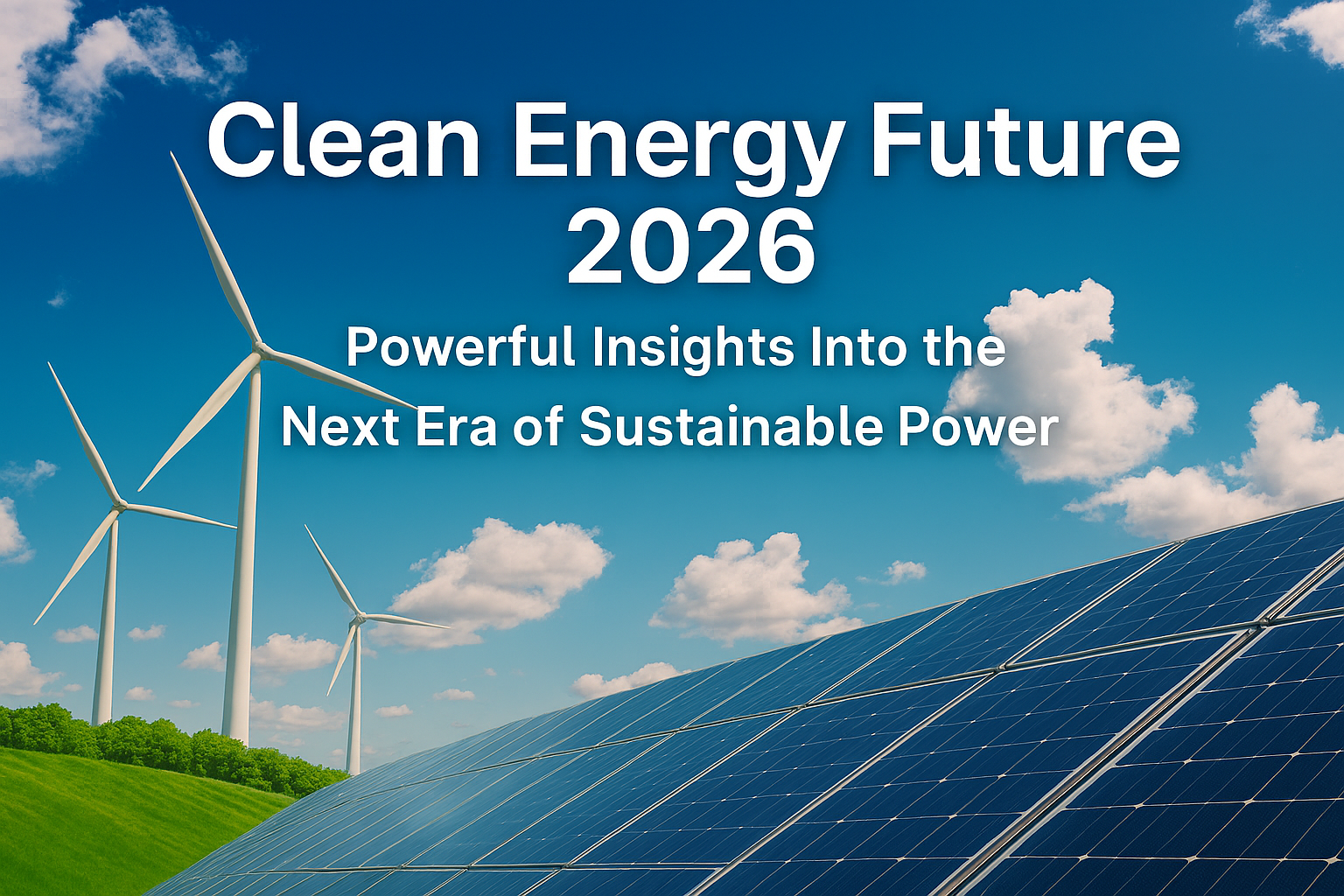
Clean Energy Future 2026 is shaping a new era of sustainability with solar, wind, hydrogen, and smart-grid innovations. Explore key trends, technologies, and global growth insights for 2026.
Clean Energy Future 2026
The Clean Energy Future 2026 is not just a prediction—it is a rapidly unfolding reality. Around the world, nations, industries, and consumers are pushing for greener, cleaner, and more efficient energy sources. This shift is rewriting the rules of power generation, energy storage, transportation, and energy sources. As climate concerns rise and governments expand renewable energy mandates, 2026 is becoming a defining year for clean power transformation.
To help you understand what the Clean Energy Future 2026 looks like, this article explores emerging technologies, global trends, market predictions, real-world examples, and the pathways leading to a greener tomorrow.
Why Clean Energy Future 2026 Matters
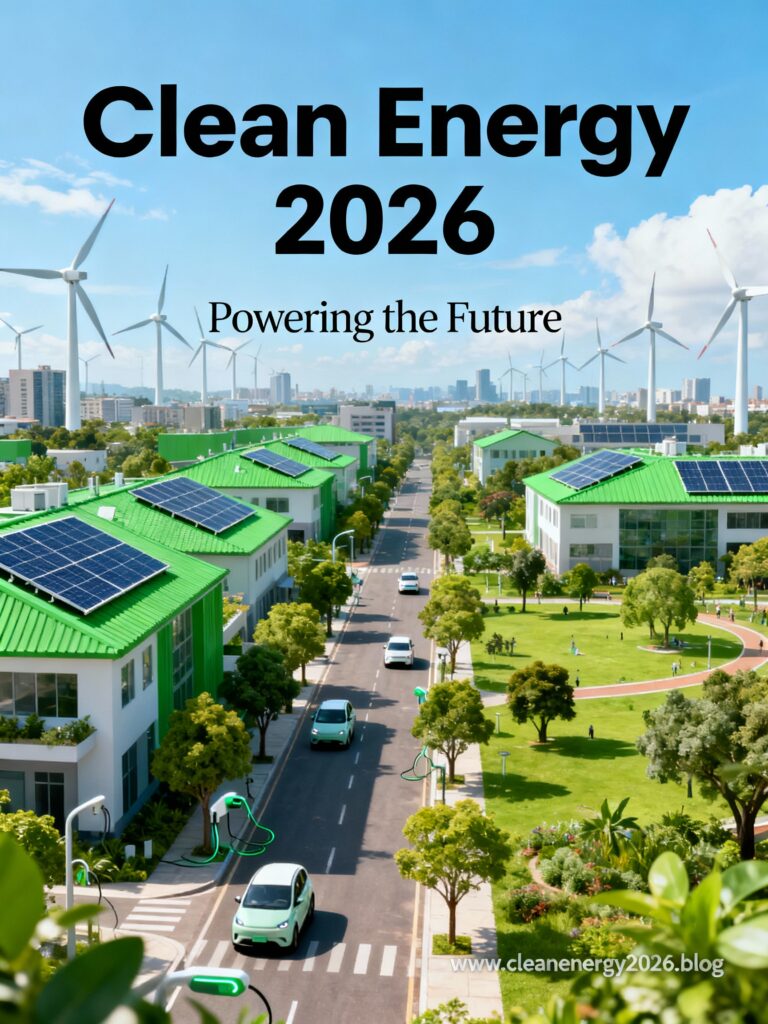
The world is at a critical point. Fossil fuels are becoming more expensive, environmental risks are rising, and consumers are demanding sustainability. That is why the Sustainable Energy Vision 2026.
represents more than a technological shift—it is a global movement.
Cleaner energy means:
✔ Lower carbon emissions
✔ Cheaper electricity in the long run
✔ Healthier air quality
✔ Better resilience against climate change
✔ Green jobs and new economic opportunities
With leading nations pledging net-zero targets, the transition is accelerating.
Key Drivers Behind the Clean Energy Future
Several forces are pushing the world toward the Renewable Power Future 2026, including:
- Government subsidies and climate policies
- Cheaper renewable technology
- High-efficiency solar and wind systems
- Battery storage breakthroughs
- Corporate sustainability commitments
- Innovation in hydrogen and biofuels
Together, these factors form the backbone of global energy transformation.
Top Trends Shaping the Clean Energy Future 2026
1. Solar Power Growth in the Green Technology Future 2026
Solar will be the fastest-growing renewable energy source by 2026. Modern solar panels are cheaper, more durable, and more efficient. Rooftop solar, floating solar farms, and solar-powered homes are becoming mainstream.
Global solar capacity is expected to triple by 2026.
2. Wind Energy Leading the Clean Energy Future 2026
Wind energy—both onshore and offshore—is expanding rapidly. Offshore wind farms are now generating more power per turbine thanks to larger blades and advanced materials.
Floating wind farms could become a major contributor by 2026.
3. Hydrogen Fuels Revolutionizing the Clean Energy Future 2026
Hydrogen fuel, especially green hydrogen, is gaining momentum as a clean replacement for fossil fuels in industries like
- Steel production
- Shipping
- Aviation
- Heavy vehicles
Countries like Japan, Germany, and India are heavily investing in hydrogen ecosystems.
4. Battery Storage & Energy Storage Systems
The Clean Energy Future 2026 cannot exist without reliable storage. Lithium-ion, solid-state batteries, and grid-level storage systems make renewable energy stable, even on cloudy or windless days.
5. Smart Grids & Digital Energy Systems. https://www.un.org/en/climatechange
Smart grids allow efficient distribution, lower power losses, and real-time energy management. By 2026, AI-powered smart grids will integrate:
- Solar homes
- Electric vehicles
- Smart appliances
- Battery backup systems
This digital transformation is key to future energy stability.
The Role of Governments in the Clean Energy Future 2026
Governments worldwide are offering:
- Tax benefits
- Subsidies
- Carbon credits
- Renewable energy certificates
- Strict emission standards
Such initiatives help individuals and industries adopt clean energy faster.
Environmental Benefits of Clean Energy Future 2026
The ecological advantages are massive:
- Reduced greenhouse gas emissions
- Lower dependency on fossil fuels
- Cleaner air and water
- Healthier ecosystems
- Climate change mitigation
Every country embracing renewable energy accelerates global progress.
Challenges Slowing Down the Clean Energy Future 2026
Despite the momentum, challenges remain:
- High initial installation cost
- Lack of skilled workforce
- Grid limitations
- Limited awareness among consumers
- Slow policy implementation in developing nations
However, ongoing innovation is gradually reducing these barriers.
Final Thoughts
The Clean Energy Future 2026 is a powerful turning point in human history. With rapid innovation, government support, and global awareness, clean energy is not a distant dream—it is happening right now. By 2026, renewable energy will become more affordable, more accessible, and more embedded into daily life than ever before.
The transition to clean energy is not just about technology; it is about building a cleaner, healthier, and more sustainable world for future generations.